Insider
New Experience
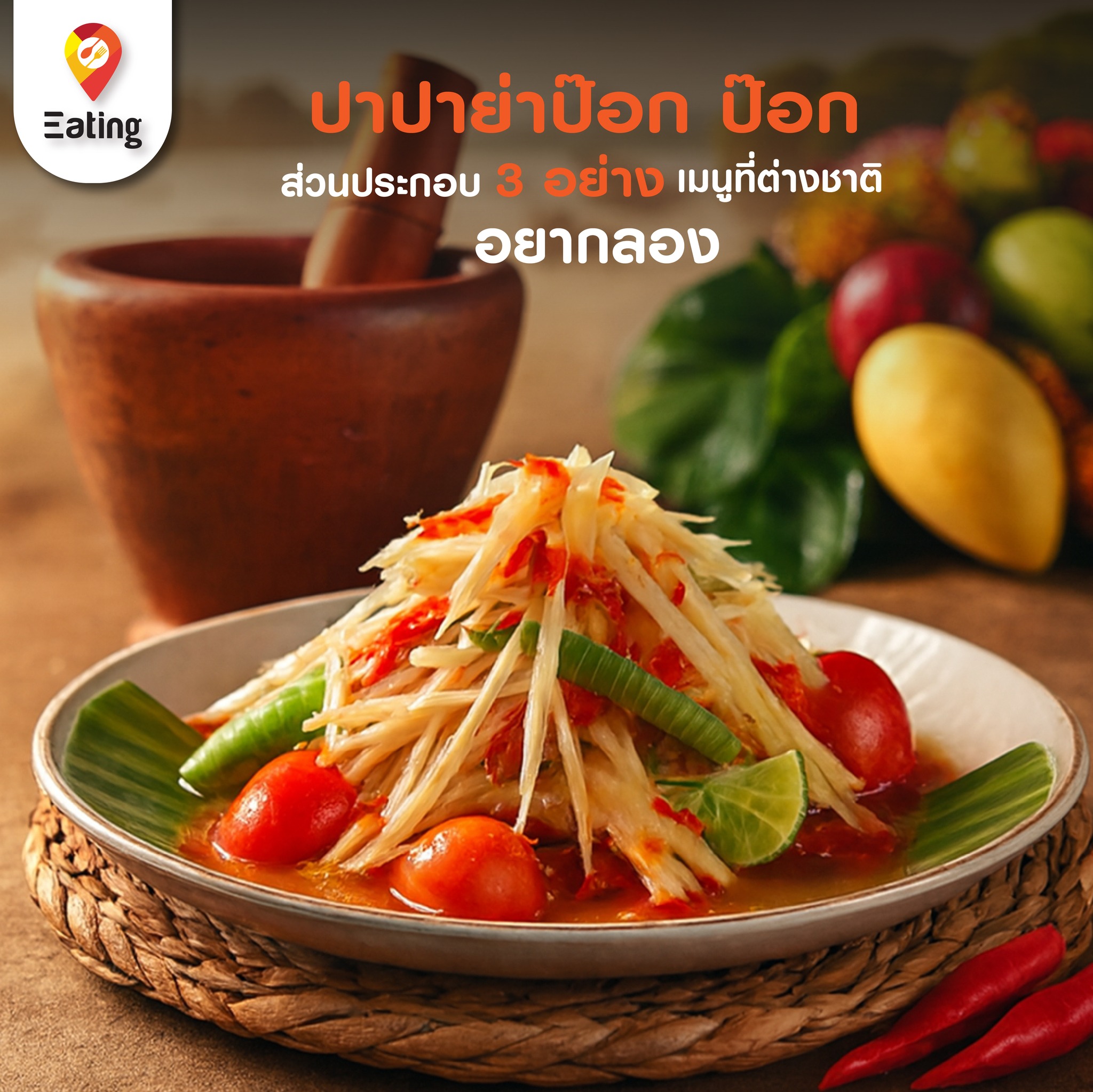
ปาปาย่าป๊อก ป๊อก
ส่วนประกอบ3อย่างที่ต่างชาติอยากลอง
 ปาปาย่าป๊อก ป๊อก
เมนูส้มตำ จากผลไม้ข้ามทวีป สู่จานเด็ดที่ต่างชาติอยากลอง หากถามว่าอาหารไทยจานไหนที่ดังไปทั่วโลก นอกจากต้มยำกุ้งหรือผัดไทย คำตอบที่ตามมาติด ๆ ก็คือ “ส้มตำ” อาหารง่าย ๆ ที่มีเพียงครกกับสาก แต่กลับสร้างเสน่ห์ให้คนกินทั่วโลกหลงใหลได้
.
สิ่งที่น่าประหลาดใจคือ “พระเอก” ของเมนูนี้อย่าง มะละกอ จริง ๆ แล้วไม่ใช่พืชพื้นเมืองเอเชียเลย แต่มาจาก ทวีปอเมริกา ก่อนจะเดินทางมากับพ่อค้าชาวสเปน–โปรตุเกสในราว 400 ปีก่อน และถูกนำเข้ามาปลูกในเอเชียตะวันออกเฉียงใต้
.
เมื่อมะละกอเข้ามาสู่ดินแดนลุ่มน้ำโขง ชาวลาวและอีสานก็ได้สร้างสรรค์วิธีการกินแบบไม่เหมือนใคร คือการ ตำมะละกอดิบเข้ากับพริก เกลือ กระเทียม และปลาร้า เกิดเป็นเมนูที่เรียกว่า “ตำบักหุ่ง” รสจัด เผ็ด เค็ม เปรี้ยวแบบบ้าน ๆ แต่กินแล้วสดชื่นคลายร้อน
.
ต่อมาเมื่อผู้คนอีสานอพยพเข้ามาทำงานในกรุงเทพฯ เมนูนี้ก็ขยายเข้ามาสู่ภาคกลาง ถูกปรับสูตรใหม่ให้อ่อนลง ใช้ กุ้งแห้ง น้ำตาลปี๊บ ถั่วลิสง แทนปลาร้า และเรียกในชื่อที่เข้าใจง่ายว่า “ส้มตำ” หมายถึงอาหารที่มีรส “ส้ม” หรือเปรี้ยว และถูก “ตำ” ในครกนั่นเอง
.
แล้วทำไม “ส้มตำ” ถึงกลายเป็นเมนูที่ต่างชาติอยากลอง?
เพราะความลงตัวของรสชาติและประสบการณ์ ความเผ็ดจัดที่ไม่เหมือนเผ็ดพริกฝรั่ง ความเปรี้ยวสดชื่นจากมะนาวหรือมะขาม ความหอมเค็มกลมกล่อมของน้ำปลา และความกรุบกรอบจากมะละกอดิบ ทุกอย่างผสมกันในครก แล้วออกมาเป็นอาหารที่ กินง่าย ราคาถูก แต่รสชาติซับซ้อน จนใครมาประเทศไทยก็อยากลองสักครั้ง
.
ส้มตำจึงไม่ใช่แค่อาหาร แต่เป็นเรื่องเล่าของการเดินทาง จากผลไม้ต่างถิ่น สู่การตีความใหม่โดยคนลุ่มน้ำโขง จนกลายเป็นเมนูที่ทั้งคนไทยและต่างชาติยกให้เป็นหนึ่งใน อาหารที่ต้องกินก่อนตาย
.
ปัจจุบันมะละกอก็ยังเป็นวัตถุดิบหลักแต่ก็มีการแอดออนเนื้อสัตว์ ผลไม้ชนิดต่างๆเพื่อให้ได้อรรถรสในการกินมากยิ่งขึ้น อะไรที่สามารถใส่ในครกได้เรียกว่าเอามาตำหมด แล้วเพื่อนๆหล่ะชอบเมนูไหนกัน
Papaya Pok Pok!
From a transcontinental fruit to a world-famous dish, Som Tam has become one of Thailand’s most iconic foods. If you ask which Thai dishes are most famous worldwide, besides Tom Yum Goong or Pad Thai, the answer that always follows closely is Som Tam — a simple dish that needs only a mortar and pestle, yet captivates people around the globe.
.
Surprisingly, the star of this dish, papaya, is not even native to Asia. It actually originated in the Americas and was brought across oceans by Spanish and Portuguese traders around 400 years ago, before being cultivated in Southeast Asia.
.
Once papaya reached the Mekong region, Lao and Isaan people came up with a unique way to eat it — by pounding raw papaya with chilies, salt, garlic, and fermented fish sauce. The result was a rustic yet refreshing dish known as “Tam Mak Hoong” — fiery, salty, sour, and intensely flavorful.
.
As people from Isaan migrated to Bangkok, the dish made its way into central Thai cuisine. It was adapted to suit local tastes by replacing fermented fish sauce with dried shrimp, palm sugar, and peanuts. The dish was then called “Som Tam”, meaning “sour” (som) and “pounded” (tam).
.
So why do foreigners love Som Tam so much?
It’s all about the balance of flavors and the eating experience — a fiery spiciness unlike Western chili, a refreshing sourness from lime or tamarind, the savory depth of fish sauce, and the crisp crunch of shredded papaya. Together, these create a dish that is affordable, refreshing, and complex in flavor — a must-try for anyone visiting Thailand.
.
Som Tam is therefore more than just food. It’s a story of cultural journey — from a foreign fruit to a Mekong reinterpretation, and finally, to a dish embraced by both Thais and foreigners as one of the “must-eat dishes before you die.”
.
Today, papaya remains the main star, but countless creative twists have emerged — with added meats, seafood, or fruits for even bolder flavors. Basically, if it can fit into a mortar, it can be pounded into Som Tam!
So, which Som Tam variation is your favorite?