Insider
New Experience
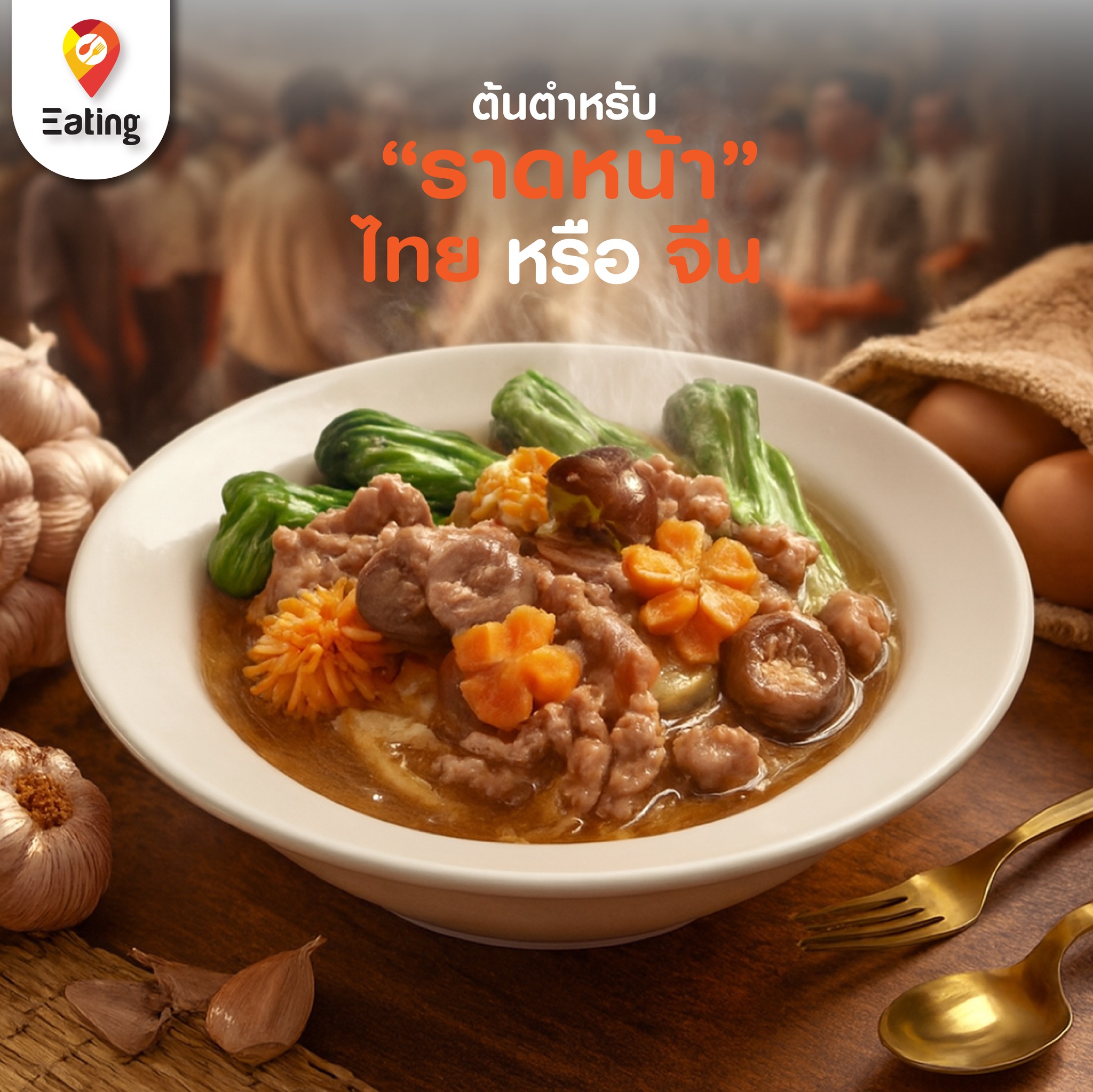
ต้นตำหรับ"ราดหน้า"
ไทยหรือจีน
 ราดหน้า
เมนูที่คนไทยคุ้นเคยกันดี มีต้นกำเนิดจากประเทศไทย แต่ได้รับอิทธิพลจากอาหารจีน โดยเฉพาะชาวแต้จิ๋วที่อพยพเข้ามาค้าขายในไทยเมื่อร้อยกว่าปีก่อน
.
 เดิมทีเมนูนี้เกิดจากคนจีนโพ้นทะเล (โดยเฉพาะชาวแต้จิ๋ว) ที่นำเส้นก๋วยเตี๋ยวผัดและน้ำราดแบบจีนมาปรุงขาย เส้นใหญ่ผัดไฟแรงจนหอมไหม้นิด ๆ ราดด้วยน้ำซอสข้น ใส่คะน้าและเนื้อสัตว์ตามชอบ

.
 เมื่อมาถึงไทยก็ถูกดัดแปลงให้รสเข้มขึ้น ใส่ซีอิ๊วดำหวาน หมูหมัก และผักคะน้าไทย
น้ำซุปใสถูกปรับให้ข้นด้วยแป้งมัน เสิร์ฟพร้อมเครื่องปรุงอย่างพริกน้ำส้ม  น้ำปลา
  และน้ำตาล
  เพื่อให้ปรุงเพิ่มได้ตามใจ
.
 ชื่อ “ราดหน้า” ก็ตรงไปตรงมา เอาเส้นวางลงจาน แล้ว “ราด” น้ำซอสลงบน “หน้า” เส้น
จึงได้ชื่อเรียกแบบที่เรารู้จักกัน
.
 ทุกวันนี้ ราดหน้ากลายเป็นเมนูสิ้นคิดที่ไม่สิ้นเสน่ห์ จะทำกินที่บ้านหรือสั่งตามร้านก็อร่อยได้ในไม่กี่นาที อิ่มง่าย ปรับได้หลากหลาย และเป็นหลักฐานชัดเจนว่าครัวไทยนั้นเก่งในการรับวัฒนธรรมอื่นมาปรุงให้เป็นเอกลักษณ์ของตัวเอง
Rad Na
A beloved Thai dish  with its roots in Thailand, yet influenced by Chinese cuisine
especially from the Teochew immigrants who came to trade in Thailand over a hundred years ago.
.
Originally created by overseas Chinese (mainly Teochew),this dish features wide rice noodles stir-fried over high heat for a slightly smoky aroma, topped with a thick savory gravy, Chinese kale , and your choice of meat .
.
In Thailand, the recipe was adapted to suit local tastes dark soy sauce for sweetness, marinated pork, and Thai kale for a fresh crunch. The clear broth was thickened with tapioca flour, and served with condiments like chili vinegar ,
fish sauce , and sugar for extra flavor.
.
The name “Rad Na” literally means“pouring sauce over the noodles”
a direct description of how it’s served.
.
Today, Rad Na remains a quick, satisfying dish that can be made at home or ordered at a restaurant. It’s easy to customize and stands as proof that Thai cuisine excels at embracing other cultures and turning them into something uniquely Thai