Insider
New Experience
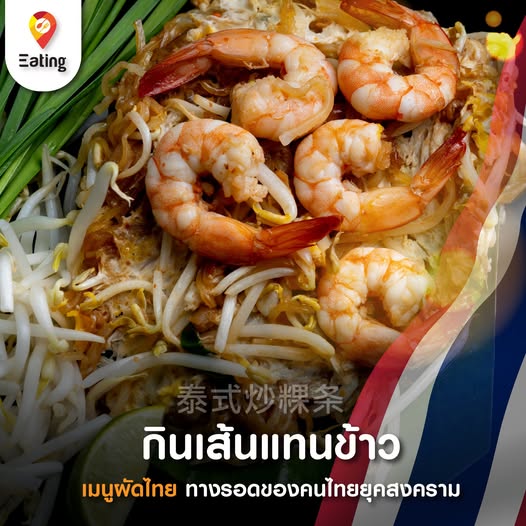
กินเส้นแทนข้าว
เมนูผัดไทย ทางรอดของคนไทยยุคสงคราม
ช่วงสงครามโลกครั้งที่ 2 ประเทศไทยเผชิญกับภาวะเศรษฐกิจที่ย่ำแย่จากหลายปัจจัย ทั้งปัญหาความไม่มั่นคงทางการเมือง สงครามที่ปะทุขึ้นในเอเชียตะวันออกเฉียงใต้ และความสัมพันธ์ที่ตึงเครียดกับชาติตะวันตก โดยเฉพาะเมื่อไทยต้องเลือกข้างระหว่างญี่ปุ่นกับฝ่ายพันธมิตร ซึ่งนำไปสู่การขาดแคลนทรัพยากรอย่างหนัก โดยหนึ่งในสิ่งที่ประชาชนได้รับผลกระทบโดยตรงคือ “ข้าวสาร”
.
ข้าวในยุคนั้นเป็นอาหารหลักของคนไทย แต่เมื่อเกิดสงคราม ข้าวกลายเป็นสินค้าควบคุมที่มีราคาสูง รัฐบาลจึงต้องหาวิธี “ประหยัดข้าว” โดยไม่กระทบต่อความมั่นคงทางอาหารของประชาชน จอมพล ป. พิบูลสงคราม ซึ่งเป็นผู้นำรัฐบาลในขณะนั้น จึงออกนโยบายเชิงรุกที่ไม่ใช่แค่การควบคุมราคาเท่านั้น แต่ยัง สร้างกระแสให้คนไทยหันไปบริโภค “อาหารที่ใช้น้อยกว่าข้าว” เป็นหลัก
.
หนึ่งในแนวทางที่ถูกเลือกคือ “การกินเส้น” โดยเฉพาะก๋วยเตี๋ยว เพราะถึงแม้จะทำมาจากข้าวสาร แต่การแปรรูปเป็นเส้นนั้นใช้ข้าวน้อยกว่าการหุงเป็นข้าวสวยปกติ กล่าวคือ คนไทยสามารถอิ่มจากก๋วยเตี๋ยวในปริมาณที่ใช้น้อยกว่าข้าว รัฐบาลจึงถือโอกาสนี้ส่งเสริมก๋วยเตี๋ยวให้กลายเป็นอาหารของคนไทยทั่วไป
.
แต่สิ่งที่น่าสนใจคือ ในช่วงเวลานั้น “ก๋วยเตี๋ยว” ยังคงถูกมองว่าเป็นอาหารของคนจีนอยู่ เพราะมีรากมาจากชุมชนชาวจีนโพ้นทะเล และร้านก๋วยเตี๋ยวในยุคนั้นส่วนใหญ่ก็ดำเนินกิจการโดยคนไทยเชื้อสายจีน ดังนั้นเพื่อ “ทำให้ก๋วยเตี๋ยวเป็นของไทยแท้” จอมพล ป. จึงปรับภาพลักษณ์ใหม่ เปลี่ยนชื่อเรียกจาก "ก๋วยเตี๋ยวผัด" ให้กลายเป็น "ผัดไทย" โดยเน้นวัตถุดิบในประเทศ ใช้น้ำมะขามเปียก น้ำปลา น้ำตาลปี๊บ และเต้าหู้แทนเนื้อสัตว์ราคาแพง เพื่อให้ต้นทุนต่ำและเข้าถึงได้ทุกชนชั้น
.
มีการจัดทำ สูตรกลางผัดไทย และส่งเสริมให้ร้านค้าในท้องถิ่นทำตามสูตรนี้ แจกจ่ายสูตรไปตามโรงเรียน ชุมชน และสถานที่ราชการ พร้อมกับโฆษณาทางวิทยุและโปสเตอร์ รณรงค์ให้คนไทย “รักชาติด้วยการกินผัดไทย” นับเป็นครั้งแรกที่อาหารจานหนึ่งกลายเป็น “สื่อประชาสัมพันธ์ของรัฐ” ในแบบที่เราแทบไม่เห็นมาก่อนในประวัติศาสตร์ไทย
.
นอกจากนี้ บางแหล่งข้อมูลบันทึกว่า รัฐบาลยังจัด “รถเข็นขายผัดไทยเคลื่อนที่” แจกอุปกรณ์ รถเข็น และวัตถุดิบให้ประชาชนที่ยากจน นำไปตั้งตัวเป็นอาชีพ จึงเป็นที่มาว่าทำไม “ผัดไทย” จึงแพร่หลายอย่างรวดเร็วในช่วงเวลาสั้นๆ และกลายเป็น อาหารสตรีทฟู้ดประจำชาติ
.
กระแสนิยมนี้ไม่ได้เกิดขึ้นโดยบังเอิญ แต่เป็นผลพวงจากสงคราม ความยากจน และการชี้นำทางวัฒนธรรมของผู้นำ ที่ใช้ “อาหาร” เป็นเครื่องมือในการควบคุมอุดมการณ์ และสร้างสำนึกแห่งชาติแบบใหม่ให้แก่ประชาชน
.
“ผัดไทย” ไม่ได้เป็นแค่อาหารจานอร่อย แต่เป็นสัญลักษณ์ของยุคหนึ่งที่คนไทยต้องดิ้นรนอยู่กับภาวะขาดแคลน ขณะเดียวกันก็เป็นจานที่รัฐสร้างขึ้นเพื่อตอบสนองทั้งปากท้องและนโยบายอุดมการณ์ในเวลาเดียวกัน
During World War II, Thailand faced a severe economic downturn caused by multiple factors, including political instability, the outbreak of war in Southeast Asia, and tense relations with Western powers. One of the country’s most critical decisions was choosing between siding with Japan or the Allied Forces, which eventually led to widespread shortages of resources. Among the most directly affected commodities was rice.
Rice had long been the staple food for Thai people. But during wartime, it became a controlled and expensive commodity. To prevent a food crisis, the government sought ways to conserve rice without undermining national food security. Prime Minister Field Marshal Plaek Phibunsongkhram introduced proactive policies, not just price controls but also campaigns to encourage the public to consume foods that required less rice.
One prominent solution was to promote “noodle consumption”, especially rice noodles (kway teow). Though made from rice, noodles required significantly less rice to produce than steamed rice. In other words, people could feel full while using less rice. The government thus promoted noodles as an alternative staple food for Thai citizens.
However, at that time, noodles were still perceived as a Chinese dish, having originated from Chinese immigrant communities. Most noodle vendors were Thai-Chinese. To “Thai-ify” the dish, Field Marshal Phibun rebranded it, changing the name from kway teow pad (stir-fried noodles) to “Pad Thai”, and adjusted the ingredients to highlight local Thai produce—using tamarind paste, fish sauce, palm sugar, and tofu instead of expensive meats, making it affordable and accessible across all social classes.
A standard Pad Thai recipe was created and distributed to local food vendors, schools, community centers, and government offices. The campaign was further supported by radio broadcasts and posters, urging citizens to “show patriotism by eating Pad Thai.” This marked the first time in Thai history that a food dish was used as a state-sponsored propaganda tool.
Some historical sources also note that the government introduced “mobile Pad Thai carts,” distributing carts, cooking tools, and ingredients to low-income citizens so they could start their own businesses. This explains why Pad Thai rapidly gained popularity and became a national street food dish.
This popularity didn’t happen by chance—it was a direct result of war, poverty, and a cultural directive from national leaders who used food as a tool to shape ideology and national identity.
So, Pad Thai is not merely a delicious dish. It is a symbol of a time when Thai people had to struggle through scarcity—and when the state used food policy to serve both practical and ideological purposes at once.