Insider
New Experience
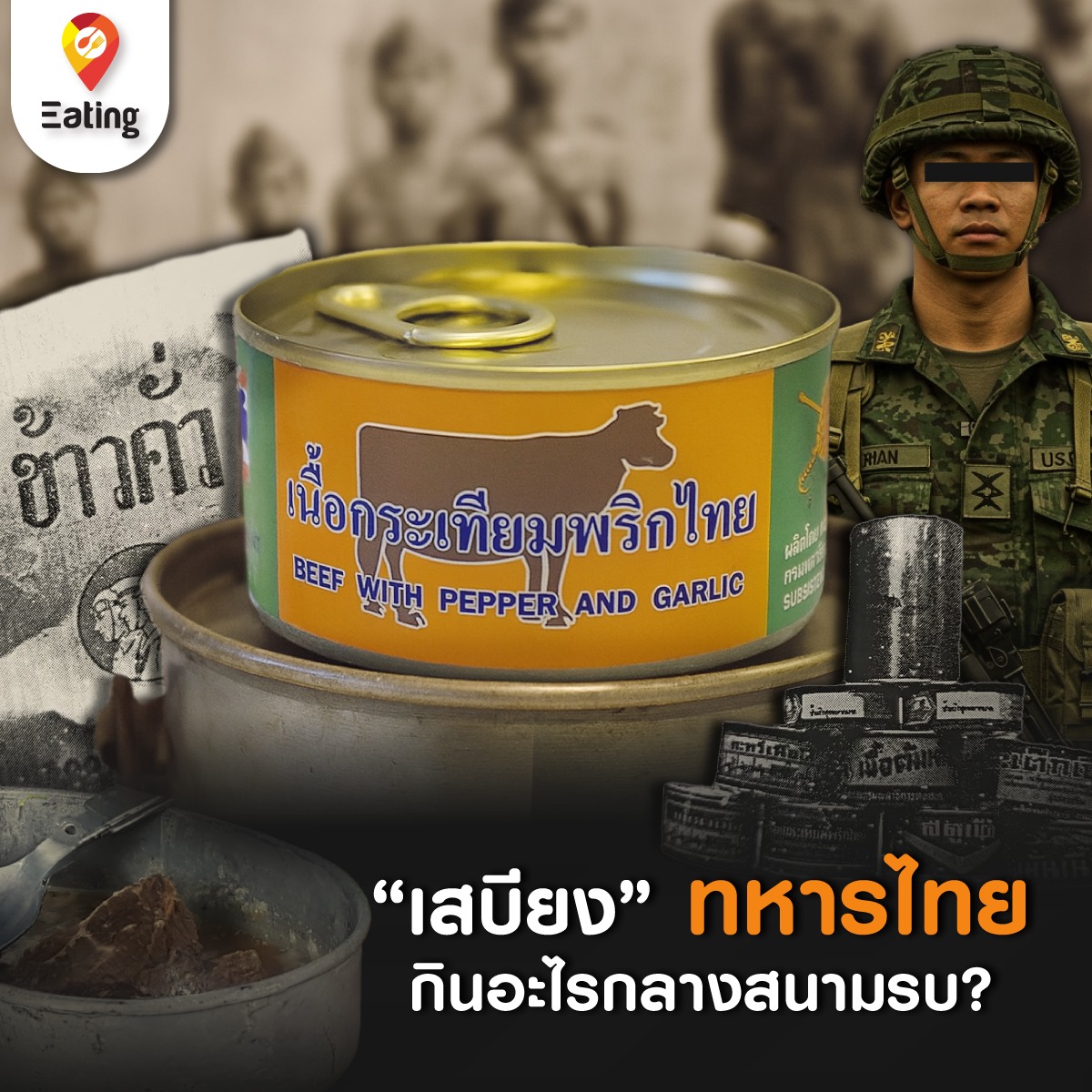
"เสบียง" ทหารไทย
กินอะไรกลางสนามรบ?

 ทหารไทยกินอะไรในสนามรบ...ช่วงสงครามโลก?
ในยุคที่โลกทั้งใบกำลังลุกเป็นไฟ “อาหาร” กลายเป็นสิ่งมีค่าพอ ๆ กับ กระสุน แล้วทหารไทยในสนามรบ...เขากินอะไรกัน?
ㅤ
แหล่งอาหารของทหารไทยในสนามรบ แบ่งเป็น 2 ส่วนหลัก ๆ:
 อาหารจากกองทัพ
ฝ่ายสูทกรรมและหน่วยพลาธิการจัดเตรียมอาหารไว้ให้ทหารล่วงหน้า โดยเฉพาะ “อาหารกระป๋อง” ที่ผลิตโดยกรมเกียกกาย ภายใต้แบรนด์ "สามทหาร" เก็บได้นาน กินง่ายระหว่างรบ
ตัวอย่างเมนูอาหารกระป๋องยุคสงครามโลก:
• เนื้อกระป๋องชนิดสูง
• เนื้อโคทากระเทียมพริกไทย
• เนื้อโคต้มเค็ม
• น้ำพริกลูกหมากมาต
• กะหรี่เนื้อโค
• สเต็กเนื้อ
• สตูเนื้อ
• มัสหมั่นเนื้อโค
ㅤ
ในยุคนั้นกระป๋องยังไม่มีฝาเปิดแบบสมัยใหม่ ทหารจึงต้องใช้ ดาบปลายปืน มีดพก หรือแม้แต่ปลายพลั่วสนาม เจาะกระป๋องด้วยแรงและทักษะ
ㅤ
 อาหารที่หาได้จากในพื้นที่
ไม่ใช่ทุกครั้งที่จะมีเสบียงเพียงพอ… ทหารไทยในแนวหน้า จึงต้อง
• ซื้ออาหารจากชาวบ้าน
• รับบริจาคหรือแบ่งจากประชาชนท้องถิ่น
• ล่าสัตว์ เก็บเห็ด ผักป่า
หรือในบางครั้ง…ถึงขั้นปล้นสะดมเพื่อความอยู่รอด
ㅤ
อาหารเหล่านี้มีบทบาทสำคัญในการประคองชีวิตของกำลังพลในสภาพแวดล้อมโหดร้าย
ㅤ
 จุดเริ่มต้นของ “MRE แบบไทย”
หลังสงครามโลกครั้งที่ 2 (ราวปี พ.ศ. 2489) กรมเกียกกายได้พัฒนา
"สะเบียงกรังประจำกายแบบ 89"
หรือจะเรียกได้ว่าเป็น MRE รุ่นบุกเบิกของกองทัพไทย ก็ไม่ผิด
อาหารในชุดนี้ออกแบบให้:
- มีสารอาหารครบถ้วน
- ให้พลังงานเหมาะสมกับภารกิจ
- เก็บได้นาน
- รสชาติถูกปากทหาร
ㅤ
ถือเป็นก้าวสำคัญที่ทำให้การจัดการเสบียงของกองทัพไทยเริ่มมีมาตรฐานทัดเทียมสากล เพราะ "ในสนามรบ อาหารคือพลังชีวิต"
What Did Thai Soldiers Eat on the Battlefield… During World War II?
At a time when the whole world was engulfed in flames, food became as precious as ammunition.
So what exactly did Thai soldiers eat in the heat of battle?
.
The sources of food for Thai soldiers on the battlefield came from two main areas:
Military-Provisioned Rations
The Army's Quartermaster and Catering Units prepared food in advance, especially canned rations produced by Kiatkai Department under the brand "Sam Thahan" (Three Soldiers) — designed for long shelf life and easy consumption during combat.
.
Sample canned menu items from WWII era:
• Premium canned beef
• Garlic and pepper stir-fried beef
• Braised salted beef
• Fermented tamarind chili paste
• Thai beef curry
• Beef steak
• Beef stew
• Thai massaman curry with beef
.
Back then, cans didn’t have pull-tab lids like today. Soldiers had to pierce open the cans using bayonets, field knives, or even the tip of entrenching tools — a task that required both strength and skill.
.
Food Sourced from the Local Environment
Rations were not always sufficient. Soldiers on the frontlines often had to:ㅤ
• Buy food from local villagers
• Receive food donations or shared meals from civilians
• Hunt wild animals, gather mushrooms and edible plants
Or in desperate situations... resort to looting to survive
These improvised sources of food played a vital role in keeping soldiers alive under harsh conditions.
.
The Beginning of Thai-Style “MREs”
After WWII, around 1946 (B.E. 2489), the Kiatkai Department developed what was known as:
“Standard Combat Ration Pack Type 89”
Considered Thailand’s first true MRE (Meal Ready to Eat), this ration pack was designed to:
- Provide complete nutritional value
- Deliver sufficient energy for military operations
- Be long-lasting and durable
- Taste good to Thai troops
.
It marked a major milestone in Thailand’s military logistics — a move toward international-standard combat rations.
.
Because in every battlefield,
“Food is survival. Food is power.”