Insider
New Experience
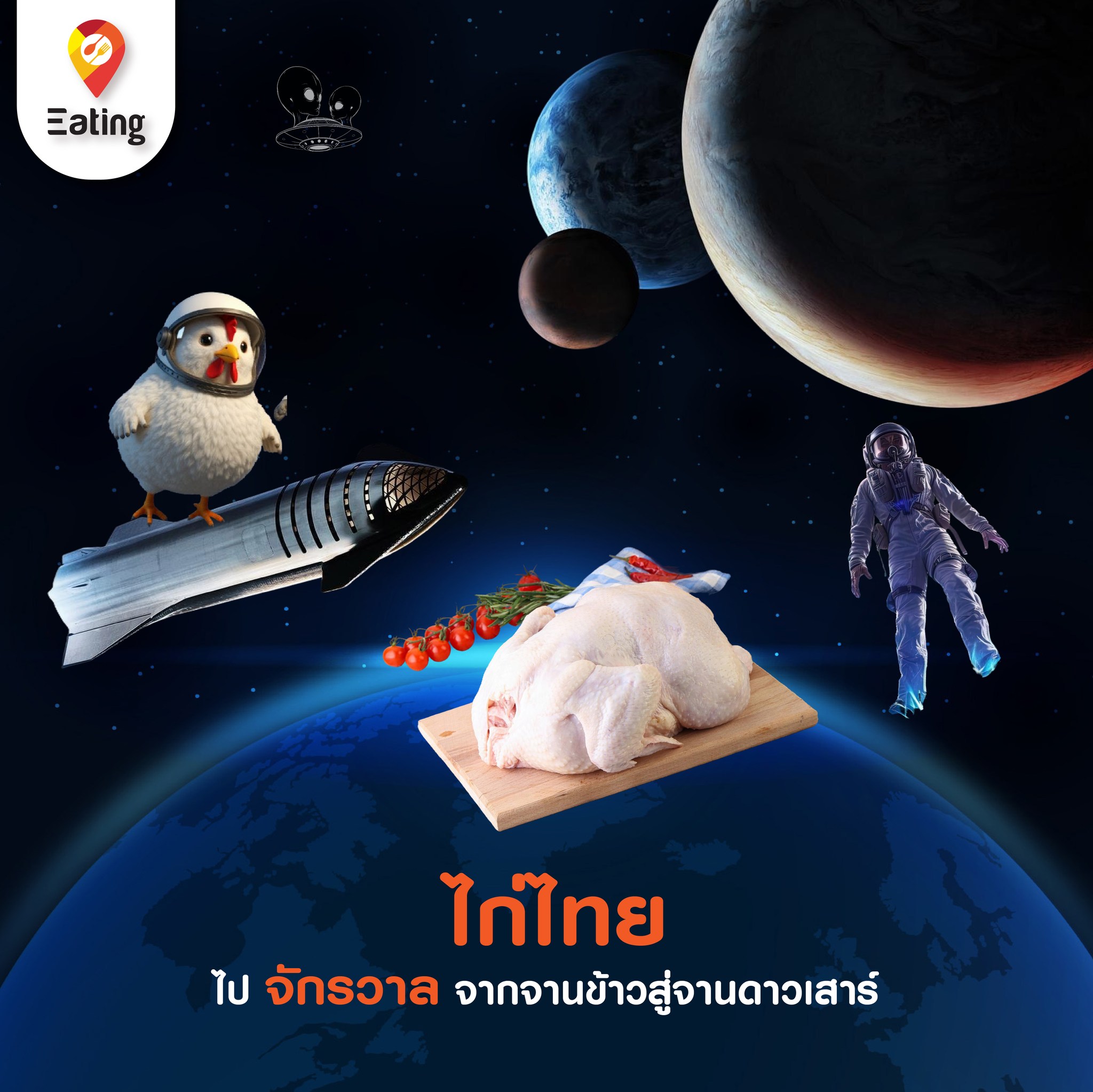
ไก่ไทยไปจักรวาล
จากจานข้าวสู่จานดาวเสาร์
ไก่ไทยไปจักรวาล จากจานข้าวสู่ดาวเสาร์
บทบันทึกการเดินทางของเมนูไทยสู่ห้วงอวกาศ
“ไก่กระเพรา” เมนูที่ขึ้นชื่อว่าเป็น ‘อาหารสิ้นคิด’ ของคนไทยกลายเป็น ‘เมนูสุดคิด’ สำหรับนักบินอวกาศ!
.
นั่นไม่ใช่มุกตลก แต่มันคือเรื่องจริงที่เกิดขึ้นในปี 2025 เมื่อเมนูสุดคลาสสิกจากครัวไทยถูกบรรจุอยู่ในภารกิจอวกาศระดับโลกอย่าง Axiom Mission 4 (Ax‑4) ซึ่งเดินทางไปยังสถานีอวกาศนานาชาติ (ISS) ด้วยยาน Crew Dragon ของ SpaceX
.
เบื้องหลังความเผ็ดร้อนที่ลอยคว้างในอวกาศนี้ ไม่ได้มาเพราะ “ความบังเอิญ” แต่คือการร่วมมือระหว่าง CPF (Charoen Pokphand Foods) กับ Axiom Space, Voyager, และ mu Space บริษัทเทคโนโลยีอวกาศจากประเทศไทย เพื่อพัฒนาอาหารไทยที่สามารถตอบโจทย์ “จักรวาล” ได้จริง
.
ไทยไม่ได้มาเล่น ๆ แต่ไปให้สุด
อกไก่กระเพราที่ขึ้นไปในภารกิจนี้ ไม่ใช่แค่เผ็ดอร่อยธรรมดา แต่ผ่านการคัดสรรและปรับกระบวนการผลิตเพื่อให้ผ่านมาตรฐานความปลอดภัยของ NASA โดยเฉพาะมาตรฐาน NASA Standard 3001, Vol.2, Rev D ที่เข้มข้นถึงขั้นตรวจสอบระดับจุลชีววิทยา ความเสถียรของอาหารในสภาพไร้แรงโน้มถ่วง ไปจนถึงบรรจุภัณฑ์ที่สามารถเก็บไว้ได้นานนับปีโดยไม่เสียคุณภาพ
.
CPF ใช้เทคโนโลยีการแปรรูปอาหารและระบบควบคุมคุณภาพสูงสุดตั้งแต่ฟาร์มถึงโรงงาน ผลิตอาหารที่ นักบินอวกาศจริง ๆ ต้องกินได้โดยไม่เสี่ยง แม้แต่ในสภาพไร้แรงโน้มถ่วง
.
แล้วทำไมต้องเป็น “ไก่กระเพรา”? รสชาติของอาหารมีผลมากต่อความรู้สึกและกำลังใจของนักบินอวกาศ ในสภาพแวดล้อมไร้แรงโน้มถ่วง ลิ้นของมนุษย์รับรสชาติได้น้อยลงกว่าปกติ อาหารจึงต้อง เผ็ดจัด และ เข้มข้น เพื่อให้รับรู้รสได้ชัด
.
จากจานข้าวสู่จานจักรวาล
ครั้งนี้ไม่ใช่แค่การขยายตลาด แต่คือ “การประกาศศักยภาพของอาหารไทย” ต่อสายตาชาวโลก (และชาวอวกาศ) เพราะต่อให้คุณจะอยู่บนโลกหรือในวงโคจรระดับ 400 กิโลเมตรเหนือพื้นดิน ความอร่อยของอาหารไทยก็ยังส่งถึงคุณได้
.
 หมายเหตุ
Axiom Mission 4 คือภารกิจอวกาศของบริษัทเอกชน ร่วมกับ NASA และ SpaceX ที่นำลูกเรือจากหลายประเทศ รวมถึงการทดลองอาหารไทยเป็นหนึ่งในภารกิจพิเศษที่ได้รับความร่วมมือจากภาคเอกชนไทยอย่าง CPF

 From Thai Streets to the Stars: The Journey of Pad Krapao into Space
A humble street dish, often joked as Thailand’s “default meal,” has officially entered the space race.
Thai Basil Chicken, or Pad Krapao, known for being the go-to “I-don’t-know-what-to-eat” dish, is now a culinary ambassador in orbit — served not in a roadside diner, but aboard the International Space Station (ISS).
This isn't satire — it's real. In 2025, this spicy stir-fry was selected for the prestigious Axiom Mission 4 (Ax-4), launched aboard SpaceX’s Crew Dragon, in collaboration with Axiom Space.
 Not Just Spicy — Scientifically Space-Ready
Behind the floating basil and chili wasn’t a happy accident — it was a high-stakes partnership between Charoen Pokphand Foods (CPF), Axiom Space, Voyager, and mu Space, a Thai aerospace tech company. Their mission: engineer an authentic Thai meal that could survive — and thrive — in zero gravity.
And they didn’t just wing it. The dish had to pass NASA’s notoriously strict safety protocols, especially the NASA Standard 3001, Vol.2, Rev D, which demands food stability, microbial safety, and packaging that can survive long-term storage in space conditions.
 Why Pad Krapao?
Because taste matters in space — a lot.
In microgravity, astronauts’ sense of taste dulls. That’s why meals need to be bold, spicy, and deeply flavorful — and Thai food fits that description perfectly. Thai basil chicken brings not only heat, but comfort — a reminder of home, even 400 kilometers above Earth.
CPF adapted its supply chain from farm to factory to ensure that astronauts would get safe, nutritious, and delicious food, even in the harshest conditions of orbit.
 From Rice Plate to Cosmic Pride
This mission wasn’t just about food — it was about national pride, and about pushing Thai soft power beyond the stratosphere.
This isn’t market expansion. It’s a milestone. It’s proof that Thai cuisine belongs on the world stage — and beyond.
So whether you're on Earth or floating among the stars, one thing is clear:
Thai food travels well.
Note
Axiom Mission 4 (Ax‑4) is a private space mission in collaboration with NASA and SpaceX, bringing international astronauts aboard the ISS. The inclusion of Thai food in this mission was made possible by CPF and its aerospace partners, marking the first time a Thai dish was officially developed for outer space.