Insider
New Experience
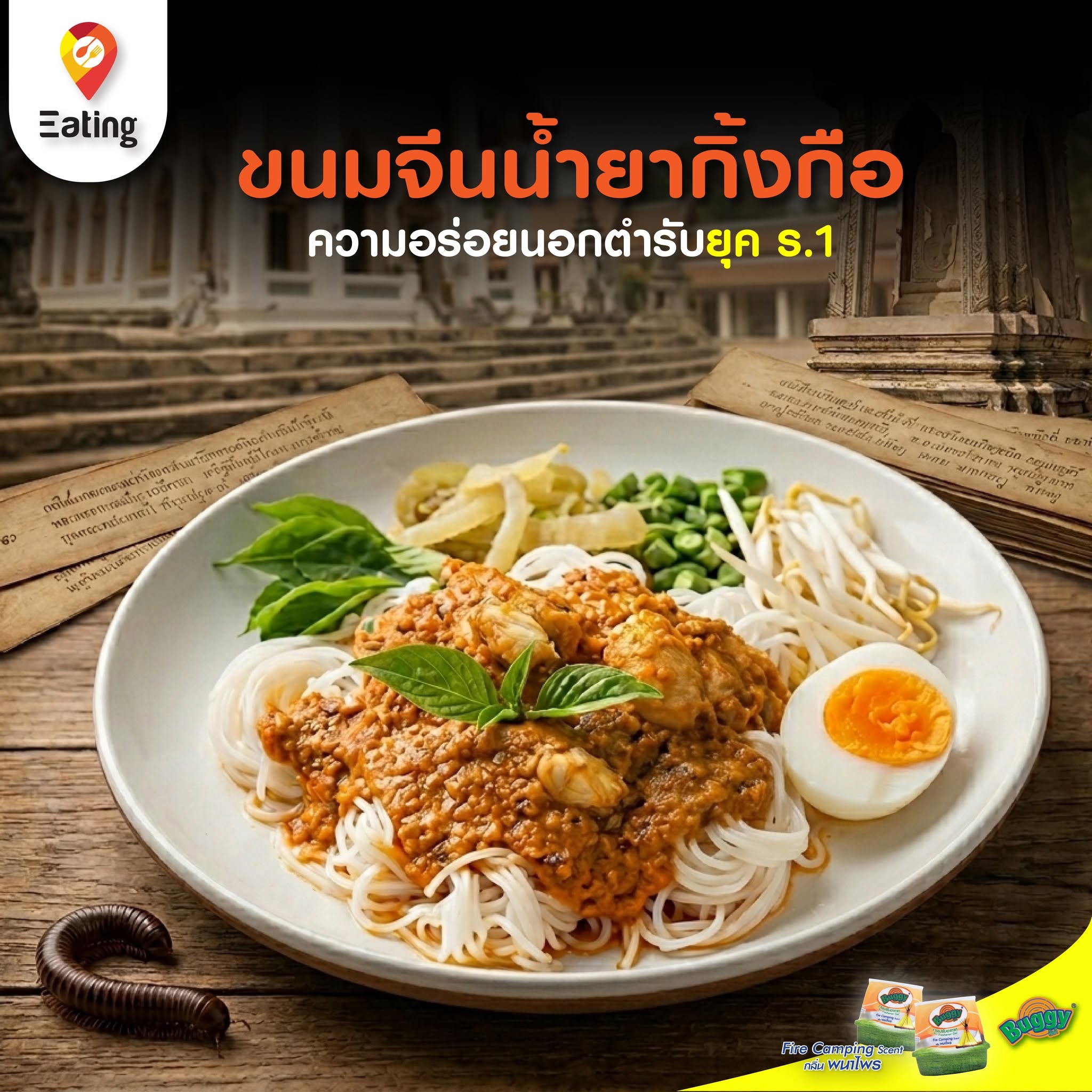
ขนมจีนน้ำยากิ้งกือ
ความอร่อยนอกตำรายุค ร.1
 “กุ้งบก” เมนูเปิบพิสดารจากกิ้งกือจริง ในบันทึกสุนทรภู่ที่คนรุ่นใหม่ต้องขนลุก!
หากพูดถึง "ขนมจีนกุ้งบก" หลายคนในยุคนี้อาจจะคิดว่าเป็นเพียงชื่อเล่นขำๆ ของเมนูสมุนไพรแห้ง แต่ถ้าเราย้อนเวลากลับไปในสมัยรัตนโกสินทร์ตอนต้น คุณอาจต้องตะลึงเมื่อพบว่า "กุ้งบก" ในวันนั้น คือ "กิ้งกือ" ตัวเป็นๆ สัตว์หลายขาที่ชวนให้คนรุ่นใหม่ขนลุกซู่ แต่สำหรับคนในอดีต มันกลับเป็นวัตถุดิบยอดนิยมที่ถูกนำมาปรุงเป็นน้ำยาขนมจีนรสเลิศ!
.
 หลักฐานคาตาในวรรณคดี: เมื่อ "สุนทรภู่" ถึงกับคลื่นไส้
ความจริงเรื่องการกินกิ้งกือไม่ได้เป็นเพียงแค่เรื่องเล่าโคมลอย เพราะมีหลักฐานลายลักษณ์อักษรปรากฏชัดเจนใน "นิราศพระบาท" ของ สุนทรภู่ มหากวีเอกแห่งยุค ท่านได้พรรณนาถึงวิถีชีวิตและวัฒนธรรมการกินของชาวบ้านระหว่างเดินทางไว้ว่า
.
“แต่น้ำยานั้นเขาว่ากิ้งกือกุ้ง เห็นชาวกรุงกินกลุ้มทั้งหนุ่มสาว
พี่คลื่นไส้ไสช้างในย่างยาว มาตามราวมรคาพนาวันฯ”
.
จากบทกลอนนี้จะเห็นได้ว่า คนในสมัยนั้นเรียกกิ้งกือกันติดปากว่า "กิ้งกือกุ้ง" หรือ "กุ้งบก" และเมนูนี้ก็ฮิตมากในหมู่ "ชาวกรุง" และคนภาคกลาง ทั้งหนุ่มสาวต่างล้อมวงกินกันอย่างเอร็ดอร่อย จนทำเอาสุนทรภู่ที่ไปยืนดูถึงกับเกิดอาการ "คลื่นไส้" ตลอดทางเดินเลยทีเดียว
.
วิธีล้างพิษกิ้งกือ สู่ "เนื้อกุ้งแม่น้ำจำลอง"
กิ้งกือเป็นสัตว์ที่มีกลไกป้องกันตัวโดยการหลั่งสารจำพวก ไซยาไนด์ ออกมา ซึ่งมีทั้งพิษและกลิ่นเหม็น แต่ด้วยภูมิปัญญาชาวบ้านอันน่าทึ่ง คนโบราณมีกรรมวิธีจัดการกับวัตถุดิบนี้อย่างเหนือชั้น
.
ล้างท้องคายพิษ นำกิ้งกือมาขังไว้ระยะหนึ่ง เพื่อให้มันขับถ่าย สิ่งสกปรก และคายสารพิษรวมถึงกลิ่นฉุนออกมาจนหมด
.
แปรรูปเนื้อใน นำกิ้งกือไปทำให้สุก จากนั้นหากเป็นกิ้งกือตัวใหญ่ จะทำการ "ลอกเปลือกแข็ง" ด้านนอกออก
.
เนื้อขาวพูนฟู นำเอาเฉพาะเนื้อด้านใน ซึ่งมี สีขาวนวล มาโขลกจนขึ้นฟู
ว่ากันว่าเนื้อกิ้งกือที่โขลกเสร็จแล้วจะมีลักษณะฟูนุ่มดูคล้ายกับ "เนื้อกุ้งแม่น้ำ" เป็นอย่างมาก แถมรสชาติและสัมผัสยังมีความใกล้เคียงกับเนื้อกุ้งจริงๆ จนกลายเป็นที่มาของชื่อ "กุ้งบก" ที่ฟังดูหรูหรานั่นเอง
.
 เมื่อกาลเวลาผ่านไป ค่านิยมและวัฒนธรรมการบริโภคของผู้คนก็เริ่มเปลี่ยนตาม เมนู "น้ำยากุ้งบก" จากกิ้งกือแท้ๆ ค่อยๆ ลดความนิยมลงและจางหายไปตามกาลเวลา จนในปัจจุบันแทบไม่มีใครรู้จักหรือกล้าที่จะลิ้มลองอีกต่อไป
.
เหลือทิ้งไว้เพียงบันทึกทางวรรณคดีและหน้าประวัติศาสตร์อาหาร ที่ช่วยสะท้อนให้คนรุ่นหลังได้เห็นถึง ความหลากหลายทางวัฒนธรรม และภูมิปัญญาของคนโบราณในการหยิบจับวัตถุดิบจากธรรมชาติรอบตัวมาสร้างสรรค์เป็นเมนูจานโปรดแม้ว่าภาพลักษณ์ภายนอกของมันในวันนี้ จะชวนให้เราขนลุกแค่ไหนก็ตาม!
"Kung Bok": The Legendary Millipede Curry from Sunthorn Phu’s Chronicles That Will Make Modern Foodies Shiver!
When people hear the name "Khanom Jeen Kung Bok" (Land-Shrimp Rice Noodles) today, they usually think of a clever nickname for a traditional, dry herbal dish. However, if we step back in time to the early Rattanakosin era, you might be shocked to learn that the "land shrimp" of that day was actually a literal millipede! This many-legged creature, which makes modern-day people shudder, was once a highly popular ingredient used to whip up a rich and savory noodle curry.
.
Solid Evidence in Classical Literature: Even "Sunthorn Phu" Was Nauseated
The history of eating millipedes is far from an urban legend. In fact, concrete written evidence can be found in "Nirat Phra Bat" (The Pilgrimage to Phra Bat), a famous travel poem penned by Sunthorn Phu, Thailand's legendary bard. He vividly documented the local culinary lifestyle during his journey:
.
"But as for the curry, they say it’s made of 'King-Kue-Kung' (millipede-shrimp);
I saw both young and old city folks gathering to devour it eagerly.
It left me so nauseous, with a churning stomach,
As I walked along the long, winding forest trail..."
.
This verse reveals that people back then commonly referred to millipedes as "King-Kue-Kung" (millipede-shrimp) or "Kung Bok" (land-shrimp). The dish was immensely popular among both young and old Bangkokians and Central region locals, who would gather to enjoy it with gusto—leaving Sunthorn Phu so deeply nauseated that his stomach turned throughout his entire journey.
.
 Ultimate Ancient Ingenuity: Purging Millipede Toxins into "Mock River Prawn"
Millipedes possess a natural defense mechanism that secretes cyanide-based compounds, which are both toxic and foul-smelling. Yet, through remarkable ancient ingenuity, ancestors developed a brilliant technique to prep this bizarre ingredient:
.
The Gut Purge: The millipedes were kept in captivity for a period, allowing them to digest, excrete all impurities, and entirely flush out their natural toxins and pungent odor.
.
Processing the Meat: Once completely purged, they were cooked. For larger millipedes, the tough, rigid outer exoskeleton was meticulously peeled off.
The Fluffy White Meat: Only the pristine white meat from the inside was harvested and pounded until light and fluffy.
Did you know? It is said that once the millipede meat was thoroughly pounded, it looked remarkably like "river prawn meat." Even the taste and texture were reportedly strikingly close to actual shrimp—which is how this dish earned its sophisticated name, "Kung Bok."
.
A Forgotten Chapter in Culinary History
As time marched on, society's values and dietary preferences shifted. The authentic millipede-based "Kung Bok Curry" gradually lost its flavor with the public and faded into obscurity. Today, almost no one knows of its existence, let alone possesses the courage to try it.
.
What remains is a fascinating record in classical literature and culinary history. It stands as a testament to past cultural diversity and the incredible resourcefulness of ancestors who transformed raw nature into a beloved delicacy—no matter how much its appearance might make our skin crawl today!