Insider
New Experience
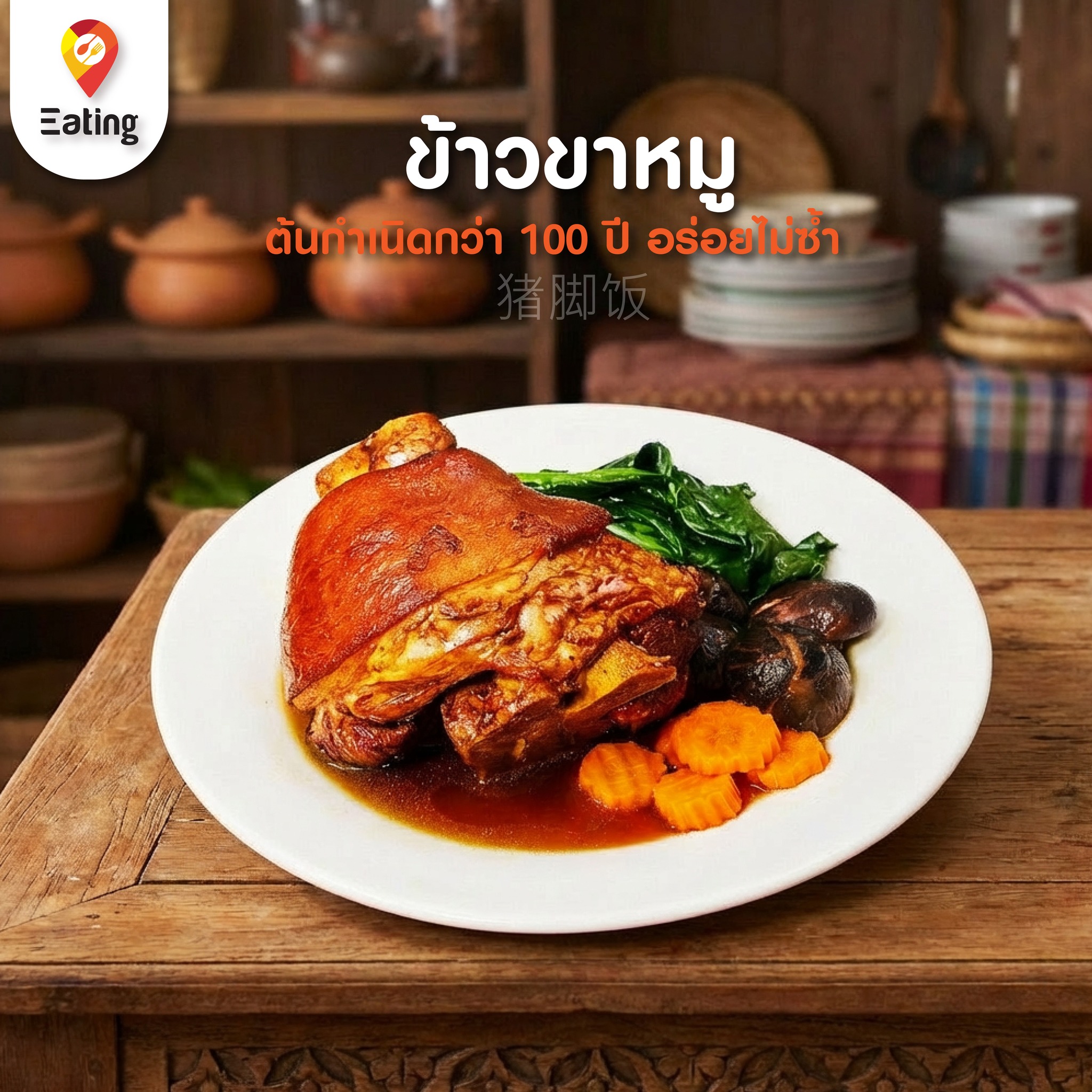
ข้าวขาหมู ต้นกำเนิดกว่า100ปี อร่อยไม่ซ้ำ
จากอาหารของผู้อพยพ กลายเป็นอาหารประจำชาติที่ใครมาเมืองไทยก็ต้องได้ลอง ข้าวขาหมู 猪脚饭 เมนูนี้มีรากกำเนิดมาจากอาหารจีนประเภทหมูตุ๋นหรือหมูพะโล้ โดยเฉพาะในกลุ่มชาวจีนแต้จิ๋วและฮกเกี้ยน ซึ่งนิยมใช้หมูส่วนขาเคี่ยวกับซีอิ๊ว เครื่องเทศ และสมุนไพรจีน จนได้รสเข้มข้นและเนื้อสัมผัสนุ่มละลายในปาก
.
เมื่อมีการอพยพของชาวจีนเข้ามาในสยามช่วงสมัยรัชกาลที่ 3 ถึงรัชกาลที่ 5 อาหารประเภทนี้จึงถูกนำติดตัวเข้ามาด้วย เริ่มต้นจากการทำกินกันเองในครอบครัวและชุมชนจีน ก่อนจะค่อย ๆ ปรับสูตรให้เข้ากับวัตถุดิบและรสนิยมของคนไทย จากหมูตุ๋นแบบจีนที่กินกับข้าวเปล่า กลายเป็น ข้าวขาหมู 猪脚饭 ที่เราคุ้นเคย
.
โดยเสิร์ฟขาหมูตุ๋นบนข้าวสวยร้อน ๆ ราดน้ำพะโล้เค็มหวานกำลังดี กินคู่กับผักกาดดอง ไข่พะโล้ และน้ำจิ้มพริกน้ำส้มที่ช่วยตัดเลี่ยน ความพิเศษของข้าวขาหมูแบบไทยอยู่ที่การผสมผสานรสชาติอย่างกลมกล่อม ไม่เค็มจัดแบบจีนดั้งเดิม แต่มีความหวานนุ่มและกลิ่นเครื่องเทศที่ไม่แรงจนเกินไป ทำให้ถูกปากคนทุกวัย
.
นอกจากนี้ยังเป็นอาหารที่ทำขายได้ตลอดวัน ยิ่งอุ่นยิ่งอร่อย จึงแพร่หลายอย่างรวดเร็วในรูปแบบร้านรถเข็นและร้านอาหารริมทาง ข้าวขาหมู 猪脚饭 กลายเป็นสตรีทฟู้ดคลาสสิกที่อยู่คู่สังคมไทยมากว่าร้อยปี สำหรับนักท่องเที่ยว ข้าวขาหมู 猪脚饭 ถือเป็นเมนูแนะนำที่สะท้อนเอกลักษณ์อาหารไทยได้อย่างดี เพราะเป็นอาหารที่เข้าใจง่าย รสชาติไม่ซับซ้อน กินสะดวก และหาซื้อได้แทบทุกพื้นที่ ไม่ว่าจะเป็นตลาดเช้า ร้านอาหารข้างทาง หรือร้านดังระดับตำนาน
Khao Kha Moo (猪脚饭) – Braised Pork Leg with Rice
From a dish brought by immigrants to one of Thailand’s must-try national foods, Khao Kha Moo (猪脚饭) tells a story of cultural blending through cuisine. This beloved dish has its roots in Chinese braised pork, especially among the Teochew and Hokkien communities, where pork leg is slowly stewed with soy sauce, Chinese spices, and herbs until rich in flavor and meltingly tender.
.
During the reigns of King Rama III to King Rama V, waves of Chinese immigrants settled in Siam and brought their food traditions with them. At first, braised pork leg was prepared within Chinese families and communities, but over time the recipe was adapted to local ingredients and Thai tastes. What was once a simple Chinese-style braised pork dish served with plain rice gradually evolved into the Khao Kha Moo that Thai people know and love today.
.
Thai-style Khao Kha Moo is served with tender braised pork leg placed over steaming hot rice, generously topped with savory-sweet braising sauce. It is commonly accompanied by pickled mustard greens, a braised egg, and a side of chili vinegar sauce that helps cut through the richness. Unlike the original Chinese version, the Thai adaptation features a more balanced flavor profile—less salty, slightly sweet, and gently aromatic—making it enjoyable for people of all ages.
.
Another reason for its lasting popularity is its practicality. Khao Kha Moo can be cooked in large batches and tastes even better when kept warm, making it ideal for street food stalls and casual eateries. Over time, it became a classic Thai street food and has remained a staple of everyday life for more than a century. For visitors to Thailand, Khao Kha Moo is highly recommended as an easy-to-love introduction to Thai cuisine. It is simple, comforting, affordable, and widely available—from morning markets and roadside stalls to famous long-established shops. Enjoying a plate of Khao Kha Moo is not just a satisfying meal, but also a taste of Thailand’s shared history between Chinese and Thai cultures, all served in one humble yet unforgettable dish.