Insider
New Experience
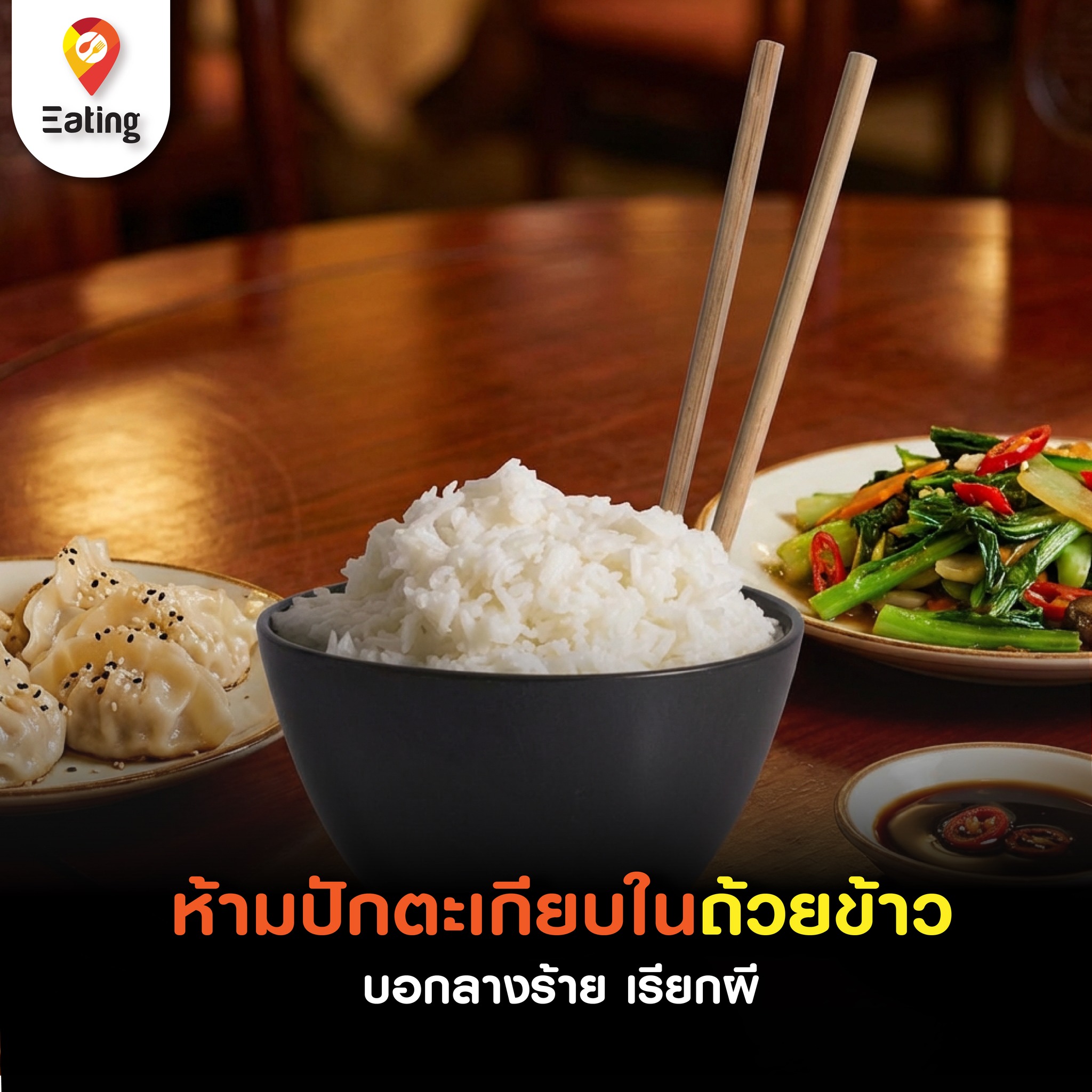
ห้ามปักตะเกียบในถ้วยข้าว บอกลางร้ายเรียกผี
 ห้ามปักตะเกียบลงในชามข้าว
หลายคนคงเคยโดนผู้ใหญ่เตือนตั้งแต่เด็กว่า “ห้ามปักตะเกียบลงในชามข้าว” เพราะเป็นลางไม่ดี บางบ้านถึงกับบอกว่าจะเรียกผีหรือทำให้โชคร้าย ความเชื่อนี้ไม่ได้เกิดขึ้นลอย ๆ แต่มีรากมาจากวัฒนธรรมการไว้ทุกข์ของชาวเอเชีย โดยเฉพาะในสังคมจีนและประเทศที่ได้รับอิทธิพลจากจีนอย่างไทย
.
ในพิธีศพแบบดั้งเดิมจะมีการปักธูปลงบนถ้วยข้าวเพื่อเป็นการบูชาผู้ล่วงลับ ภาพของตะเกียบที่ถูกปักตั้งตรงอยู่กลางชามข้าวจึงไปคล้ายกับภาพธูปในงานศพ ทำให้ถูกมองว่าเป็นสัญลักษณ์ของความตายและความอัปมงคล การกระทำแบบนั้นบนโต๊ะอาหารจึงถูกห้ามทั้งด้วยเหตุผลทางความเชื่อและมารยาท นอกจากเรื่องความหมายเชิงสัญลักษณ์แล้ว
.
การปักตะเกียบยังถือว่าไม่สุภาพในวัฒนธรรมการกินแบบเอเชีย เพราะตะเกียบควรวางพาดบนที่วางตะเกียบหรือบนขอบชามอย่างเรียบร้อย การเสียบลงในข้าวเหมือนการเล่นอาหารและอาจทำให้ข้าวกระจายหรือหกเลอะเทอะได้ด้วย เมื่อมองในอีกมุมหนึ่ง ความเชื่อนี้จึงเป็นกลไกทางสังคมที่ช่วยควบคุมพฤติกรรมให้เรียบร้อยโดยไม่ต้องอธิบายยืดยาว ผู้ใหญ่เพียงพูดว่า “ทำแบบนี้ไม่ดี” เด็กก็จะจดจำทันที
.
แม้ในปัจจุบันหลายคนอาจไม่ได้เคร่งเรื่องลางร้ายเหมือนสมัยก่อน แต่การหลีกเลี่ยงการปักตะเกียบลงในชามข้าวก็ยังเป็นเรื่องของการให้เกียรติวัฒนธรรมและผู้ร่วมโต๊ะอาหาร เพราะมารยาทเล็ก ๆ บนโต๊ะกินข้าวสะท้อนความใส่ใจและความเข้าใจในรากทางวัฒนธรรมที่สืบต่อกันมานานนั่นเอง
Do Not Stick Chopsticks Upright in a Bowl of Rice
Many people were probably warned by elders since childhood: “Do not stick chopsticks upright in a bowl of rice.” It was often said to be bad luck, and in some families, it was even believed to invite spirits or misfortune. This belief did not arise randomly; it has roots in Asian mourning traditions, particularly in Chinese culture and in countries like Thailand that have been influenced by it.
.
In traditional funeral rites, incense sticks are placed upright in a bowl of rice as an offering to the deceased. The image of chopsticks standing vertically in the middle of a rice bowl closely resembles incense at a funeral, which is why it has come to symbolize death and inauspiciousness. For this reason, the act is discouraged at the dining table, both due to belief and etiquette. Beyond its symbolic meaning, there are also practical considerations.
.
Sticking chopsticks into rice is considered impolite in many Asian dining cultures. Chopsticks are meant to be laid neatly on a chopstick rest or across the edge of the bowl. Inserting them into the rice can appear as though one is playing with food and may also cause the rice to spill or look untidy. From another perspective, this belief functioned as a social mechanism to encourage proper behavior without lengthy explanations. When elders simply said, “Don’t do that, it’s not good,” children would remember immediately.
.
Although many people today may no longer strictly believe in bad omens as in the past, avoiding the act of sticking chopsticks upright in a bowl of rice remains a way of respecting cultural traditions and the feelings of others at the table. Small table manners can reflect attentiveness and an understanding of cultural roots that have been passed down through generations.